- Skills Scoop
- Posts
- Stop asking this about ROI when it comes to learners + 5 ways to avoid employee burn out
Stop asking this about ROI when it comes to learners + 5 ways to avoid employee burn out
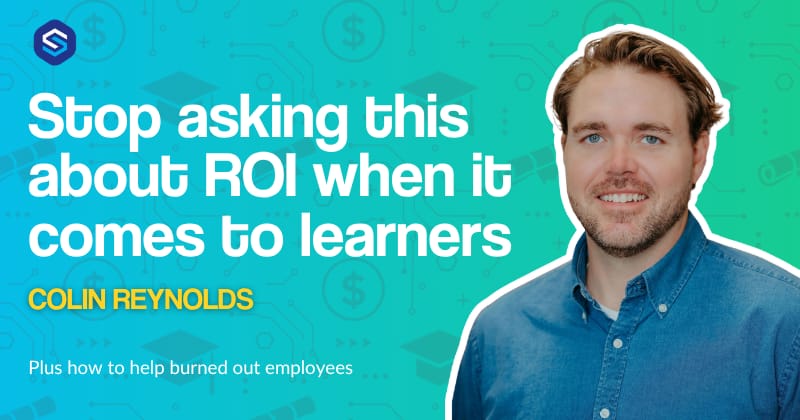
✅ Inside this issue:
Colin shares the ROI questions institutions should ask about learner mobility
5 ways to avoid your best employees burning out
The podcast on ‘self-confidence as a skill’ you should listen to this weekend
INTERESTING READS
📈 The U.S. added 178,000 jobs in March, but hiring still looks cautious beneath the headline number.
🏛️ The House passed a bill to remove degree requirements from federal contracting jobs.
🤖 Big Tech HR leaders are weighing in on how AI could reshape HR.
🗣️ Self advocacy is a skill, not a flaw, and more professionals need to treat it that way.
HIRING

The wrong ROI question is costing learners and institutions
When institutions hear "learning mobility," the first question I almost always get is: what does this cost us?
I've been in conversations recently where credit for prior learning, stackable credentials, and cross-institutional transfer get treated like revenue walking out the door.
I understand the instinct.
Institutions are navigating very real resource constraints. But that framing is the wrong unit of analysis, and I think it's quietly costing learners and systems alike.
The real question for policymakers isn't what an individual institution loses when a student moves faster through the system.
The real question is what does the system gain when more people complete, with credentials that are legible, portable, and connected to real opportunity?
We need to reimagine the larger ecosystem
Recently, I was talking with a community college leader who had redesigned an allied health program to embed stackable micro-credentials tied to specific competencies.
Employers loved it. Students could demonstrate job-ready skills faster.
But when students tried to transfer that learning to a four-year institution, it mostly disappeared, invisible in a transcript designed to count seat time rather than skills.
That moment stuck with me. The program was working, but the infrastructure around it wasn't.
Learning mobility is becoming an umbrella term for aligning campus, system, and state-level initiatives with an efficiency mindset that ultimately eases transitions and removes unintended barriers created by the inertia of legacy systems. These systems weren't built to create barriers, but the learning landscape and learner needs have evolved to a point where we need to collectively reimagine the larger ecosystem.
I'm seeing this shift take shape in real ways. Colorado Succeeds and AdvanceNC are two system-level examples of how colleges and universities are building new industry-aligned pathways and skills-based opportunities. These new programs demand a new way of documenting learning, one that can be communicated and translated to employers and academic institutions alike. The National Learning Mobility Collaborative is beginning to connect these efforts across states.
That's exactly what learning mobility infrastructure, including Learning and Employment Records (LERs), digital credentials, and shared competency frameworks, is built to do.
It goes deeper, wider, and further than a transcript. It makes a learner's skills and demonstrated competencies visible and verifiable in ways that serve multiple stakeholders: reflected back to learners so they can understand and articulate their own skill sets; mapped to skills-based job roles for employers; and verified with assessment evidence for educators assessing prior learning.
The ROI question changes entirely when you ask: how many people are stuck right now because no one can see what they already know?
The “some college, no credential” population includes millions of adults whose learning is invisible because the systems around them weren't built to surface it, which is the clearest proof point. That invisibility is proof of infrastructure failure, not a learner failure.
So what does this mean for you?
For leaders investing in connected talent systems, credential registries, and LER strategies, lean into the work.
If you're leading a program: Don’t ask whether to offer stackable credentials or credit for prior learning (CPL). Instead, ask whether your documentation infrastructure can make those achievements portable and meaningful beyond your walls. Redesigning a program without redesigning how learning is recorded is only half the work.
If you're evaluating ROI: Shift the unit of analysis from institutional revenue to system throughput. Credential completion and acceptance rates, time to employment, and wage gains are the returns that matter, and they require learner mobility, not friction.
If you're building LER infrastructure: The technical architecture is necessary but not sufficient. The hardest work is alignment, getting institutions, employers, and credentialing bodies to agree on what competencies mean and how they're verified. Start there.
The real loss in ROI comes from not making moves.
 | Colin Reynolds |
STORYTELLING
Your whitepaper isn’t the problem
You’re building something real.
A pilot. A plan.
A system with promise and steel.
Late nights in docs,
rewriting the pitch,
trying to make complex
feel simple and rich.
You shape the whitepaper.
You polish each line.
You present it again.
You say, This is the time.
And it gets read…
by the team who helped write it 🙁
Maybe one partner
kind enough to like it.
But the people you need?
The ones you hoped would care?
They scroll right past.
They were never quite there.
Not because it’s weak.
Not because it’s wrong.
But because the story
was missing its song.
In this space, good work
doesn’t speak on its own.
It needs a clear voice.
It needs to be known.
That’s where we come in.
We help it connect
to the right audience,
with the right context.
Because building is hard.
Explaining is harder.
And doing both well?
You don’t need to work harder.
You need the message to travel.
✨Maybe SkillsScoop can write a poem for you and your audience, too.
Get better results with your marketing by advertising with us. Or let’s talk about our consulting and communications packages.
WORKPLACE

5 ways to avoid your best employees burning out
For many top performers, burnout begins with misalignment.
The dependable employee becomes everyone’s backup plan. The strategic thinker gets buried in low-value tasks. The quiet leader keeps carrying the team while their own growth stalls.
According to the SHRM 2026 State of the Workplace report, burnout is one of the top concerns across employees, HR leaders, and executives. Yet 72% of workers still believe organizations could be doing more.
They’re right.
Many companies still assign work based on job titles and org charts, while real performance hinges on skills, strengths, and energy.
When leaders can’t clearly see what people are best at, work gets handed out by habit instead of fit.
That’s where burnout starts to build. Here are 5 ways to avoid it:
1. Map the skills your team actually uses
Often, leaders lack a clear picture of their people’s capabilities and how they relate to ever-changing organizational needs, which is where skill mapping comes into play. Sit down with your team and ask three simple questions:
What are you great at?
What do you spend most of your time doing?
What would you like to do more of?
You’ll quickly uncover hidden talent, wasted capacity, and responsibilities sitting with the wrong people.
2. Start tracking capability, not output
High performers don’t just get recognized, they get overloaded.
When you reward people by giving them more work, you’re training your best employees to burn out faster.
Shift the lens from:
“Who gets things done?”
To:
“Who has what capabilities?”
That’s how you scale people without breaking them.
3. Make invisible work visible
Some of the most important work in any company never shows up in metrics.
It looks like:
mentoring new hires
calming frustrated clients
fixing broken processes
connecting disconnected teams
keeping projects moving behind the scenes
When this work goes unnoticed, employees feel taken for granted. Over time, that chips away at morale. Ensure your recognition reflects contribution, not just output.
4. Create internal mobility before they mentally resign
Many employees don’t need less responsibility. They need a fresh challenge, clearer growth opportunities, or the chance to use different strengths, so create an internal mobility plan.
If growth only exists outside your company, ambitious people will eventually go find it.
Stretch assignments, internal moves, upskilling programs, and career pathways can re-energize strong talent before disengagement turns into departure.
5. Help employees own the story of their skills
In many organizations, employee capability is scattered across outdated resumes, manager notes, old performance reviews, and memory.
That makes growth harder for everyone.
Forward-thinking employers are beginning to organize skills data more intentionally through internal talent marketplaces, verified credentials, and Learning and Employment Records (LERs).
When people can clearly show what they know and what they’ve done, better decisions happen faster. And employees feel seen.
Focus on keeping your best employees energized
To keep your best employees from burning out, don’t just look at workload, alignment, recognition, and growth. Don’t forget to actually speak with them. Listening and hearing directly from them goes a long way, too!
Your goal is to understand how to see, develop, and deploy talent thoughtfully while making them feel understood and heard.
This way, you can build a workplace where high performance and healthy people coexist!
BY THE NUMBERS
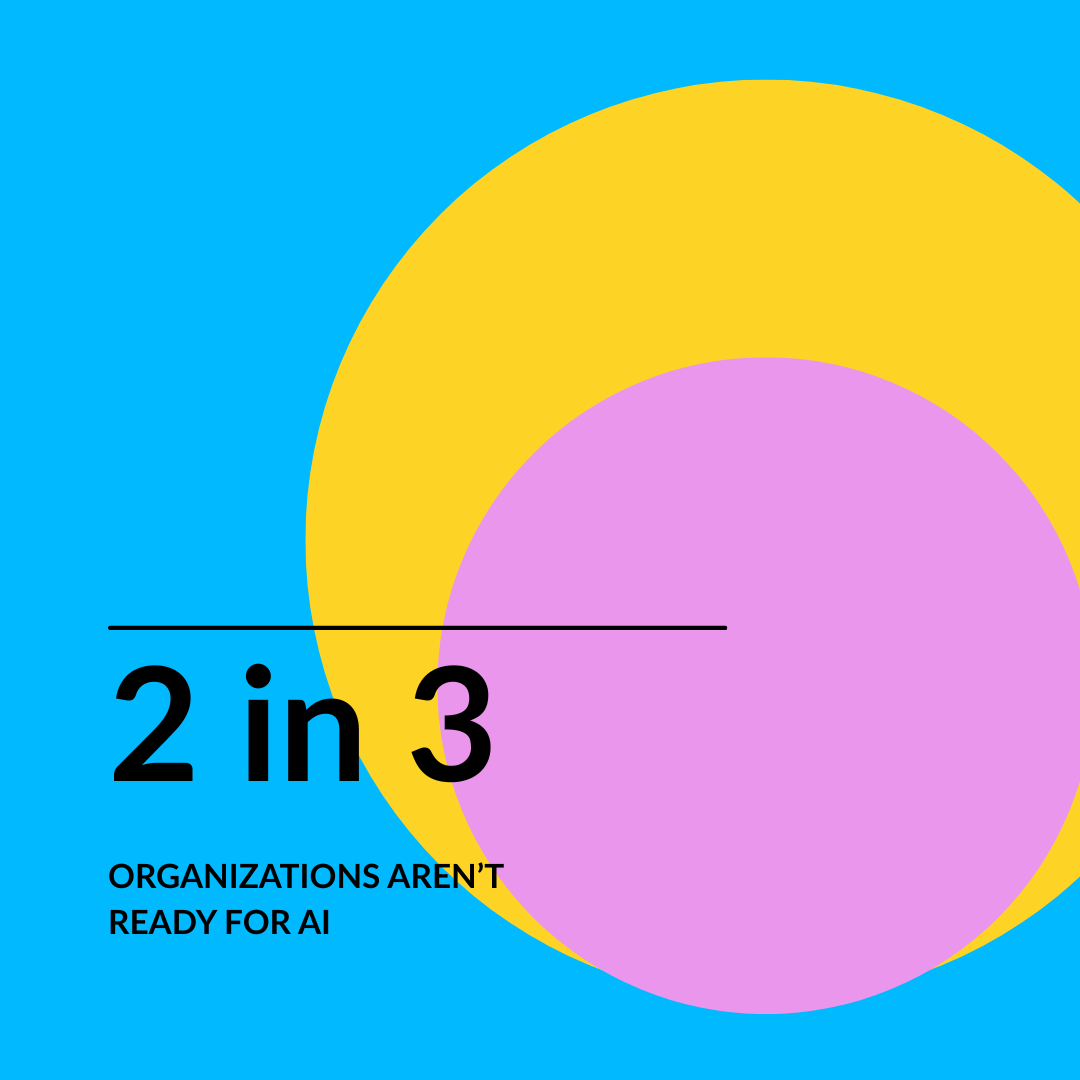
2 of 3 organizations aren’t culturally or operationally ready for AI
💡 While employees are ready to embrace AI's benefits, research shows that many organizations still lack a clear, unified AI vision tied to business priorities.
Source: The Conference Board - Dec 2025
KNOWLEDGE
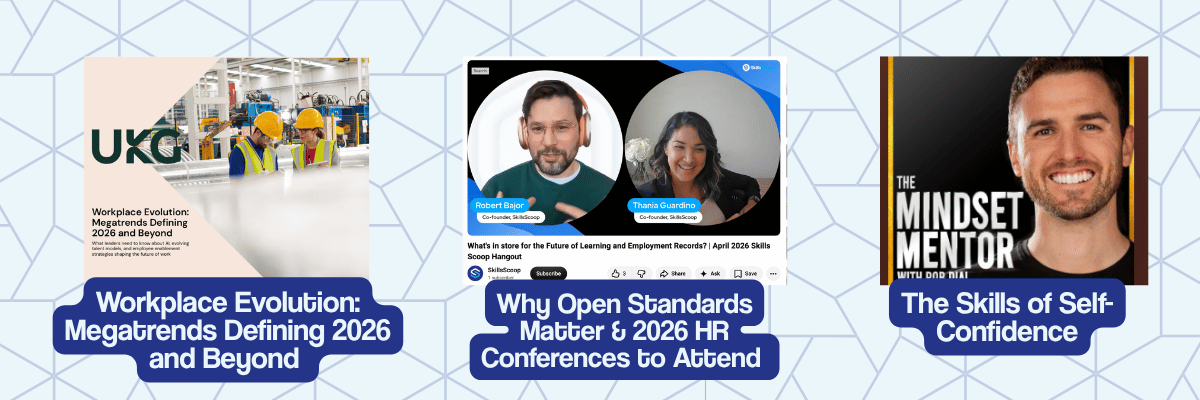
What to read, watch, and listen
📚 Read: Workplace Evolution: Megatrends Defining 2026 and Beyond by UKG
Workplace strategy is shifting fast. This report explores how leaders are preparing for AI adoption, changing talent models, and stronger employee enablement. A worthwhile read if you want a broad view of what employers are prioritizing next.
📺 Watch: Why Open Standards Matter & 2026 HR Conferences to Attend from The Hangout - SkillsScoop
Yes, we had to plug ourselves. Robert and Thania break down last month’s biggest themes, chat through why open standards deserve more attention, and share conferences worth having on your radar. Casual, useful, and a little more behind-the-scenes than the newsletter.
🎧 Listen: The Skills of Self-Confidence from The Mindset Mentor
Confidence influences how people communicate, lead, interview, and pursue new opportunities. This episode explores self-confidence as a skill that can be strengthened over time, making it a valuable listen for anyone focused on growth, resilience, and career momentum.
FOR FUN’SIES
💌 Have more feedback? Reply to this email and tell us. We read each one.
🗣️ Want to be featured as a contributor? We’re looking for industry experts to write editorials.
😬 Got a correction or a “well actually”? Send it our way: [email protected].